
The Hand Up Project
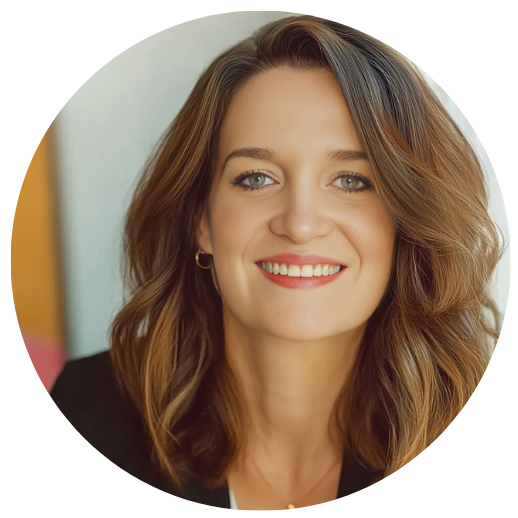
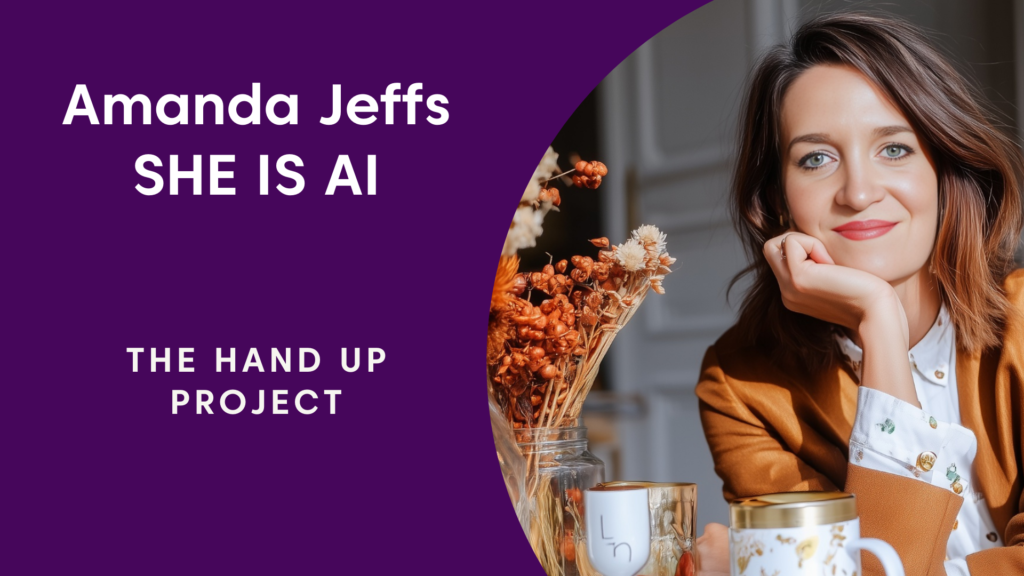
Amanda Jeffs, Founder & CEO SHE IS AI
This is the first in our Hand Up Project series; conversations with successful female founders who share the insights, hard lessons, and strategic shifts that transformed their businesses.
Today, we’re thrilled to introduce Amanda Jeffs, Founder & CEO of SHE IS AI.
Amanda started her business from a deep desire to create space for women in AI and technology who didn’t feel represented, supported, or visible. Over time, her focus has evolved from visibility alone to infrastructure – building sustainable systems so women don’t just enter the space, but can actually thrive and lead within it long-term.
We posed ten questions to Amanda about her journey. What follows are the insights that felt like the biggest hand up for any founder feeling the weight of their own growth.
What originally inspired you to start your business, and how has that initial motivation evolved?
SHE IS AI started from a deep desire to create space for women in AI and technology who didn’t feel represented, supported, or visible in the dominant narratives. I saw incredible women doing powerful work, quietly, often in isolation, and I wanted to build a global community where their voices, skills, and leadership could be amplified. Over time, that motivation has evolved from visibility alone to infrastructure. Today, our focus is on building sustainable systems across education, community, consulting, and opportunity pathways so women don’t just enter the AI space, but can actually thrive and lead within it long term.
What problem does your business solve better today than when you first began?
In the early days, SHE IS AI was primarily about connection and storytelling. Today, we solve the much harder problem of translation; helping women practically understand, apply, and integrate AI into their work and leadership in a way that feels ethical, accessible, and empowering rather than overwhelming.
What operational change or system had the biggest impact on your ability to step out of the day-to-day?
Moving from holding everything in my head to documenting decisions, processes, and repeatable workflows has been the biggest shift. This is still very much in process. The biggest shift has been stepping back and looking critically at my tech stack, simplifying it and intentionally designing automated workflows rather than relying on fragmented, manual tools and processes. My biggest lesson: create systems from the very beginning. Don’t wait until you’ve grown and accumulated messy data and duct taped processes; it’s far harder to untangle later.
What internal shift or mindset change has most transformed the way you lead?
Letting go of “the right way” and people-pleasing, and learning to make business decisions without taking them personally. I’ve also had to accept that I’m not a pit bull or a traditional “boss”; I’m a generator, inspirer, nurturer, and listener. Growing a backbone didn’t mean becoming someone else; it meant owning my leadership style and trusting that different kinds of leaders are still strong leaders.
What was a turning point or decision that significantly accelerated your business’s growth?
The last few months of deep focus have been pivotal. I’ve revisited our mission, values, goals, KPIs, and focus areas and made hard decisions about what to stop doing. Some initiatives were cut, some people moved on, others joined, and the business model became far more intentional and focused. Equally important was actually launching defined offers into the market; not just building and preparing endlessly. Having clear offers, product-market fit, and a functioning sales funnel changed everything. Build, launch, test, refine.
What challenge did you not see coming, and how did you navigate it?
I didn’t expect how much criticism comes with leadership no matter how you show up. I’ve been told I’m too weak, too bossy, too nice, too egotistical, too shy, too casual, too sweet, too harsh, often by different people at the same time. Eventually I realised it’s impossible to win that game and the only sustainable option was to let it go and show up authentically. When I stopped contorting myself to meet expectations, my energy aligned and people could feel the difference.
What role, hire, or support made the biggest difference in how your business operates?
Hiring a strong VA has been transformational; sometimes freeing up 20–30 hours a week by delegating funnels and automations. Equally impactful has been working with business advisors who helped me zoom out: understanding where the business is now, where it needs to be in 3–5 years, and mapping the path month-by-month and quarter-by-quarter, how to run business operations, finances like Profit and Loss statements, cleaning up our data room, and how reporting, and dashboards created visibility and visibility creates clarity. Everything else is just noise.
What advice would you give to other female founders working to move from doing the work to leading the business more effectively?
Start systemising earlier than feels necessary. You don’t need perfect systems but you need visible and simple ones. Write things down, keep your data in one place, have a dashboard, be strategic about your tech stack, what you spend your time on, simplify decisions, be focused, automate your sales funnels, and allow others to help carry the load, and have simple month by month goals, KPI’s and tasks to focus on. Otherwise your attention will be pulled in 50 directions.
What shift do you believe female founders are uniquely positioned to benefit from right now?
Female founders are uniquely positioned to become AI-first businesses using AI as a second brain, strategic partner, and time multiplier. By offloading mental load, admin, and repetitive work to AI, women can reclaim time, protect energy, and focus on higher-value leadership and decision-making. At the same time, we have the opportunity to shape how AI is used ethically, human-centred, and values-driven rather than reacting to it later. Every voice that engages with AI now helps shape its future, and female founders are in a powerful position to both influence that direction and directly benefit from it.
What’s one thing you wish more founders understood about building a sustainable, long-term business?
A sustainable business can’t be built on vibes, goodwill, or passion alone. You can build a movement that way; but not a business. Long-term sustainability comes from strong operational foundations: clear offers, pricing, systems, financial visibility, and infrastructure that gives people a reason to return and a way to stay. Fans are wonderful, but customers are what keep a business alive. Burnout isn’t a personal failure; it’s almost always a systems failure. When operations, finances, and decision-making are unclear, the founder ends up carrying everything. Sustainable businesses are designed to support the people running them, not rely on their exhaustion to survive.
Bonus Question
Bonus: What’s one piece of advice you wish you had received as a female leader?
People-pleasing doesn’t build businesses.
Polishing your Canva deck or endlessly tweaking your website doesn’t either.
Real progress comes from making bold uncomfortable decisions and taking action before everything feels ready.
Be ruthless with how you spend your time, effort, and energy.
Build systems that carry the weight so you don’t have to.
Think like a systems engineer, lead like a heart-led human, and let the business work for you not the other way around.
And when in doubt, stop busy work and just launch.